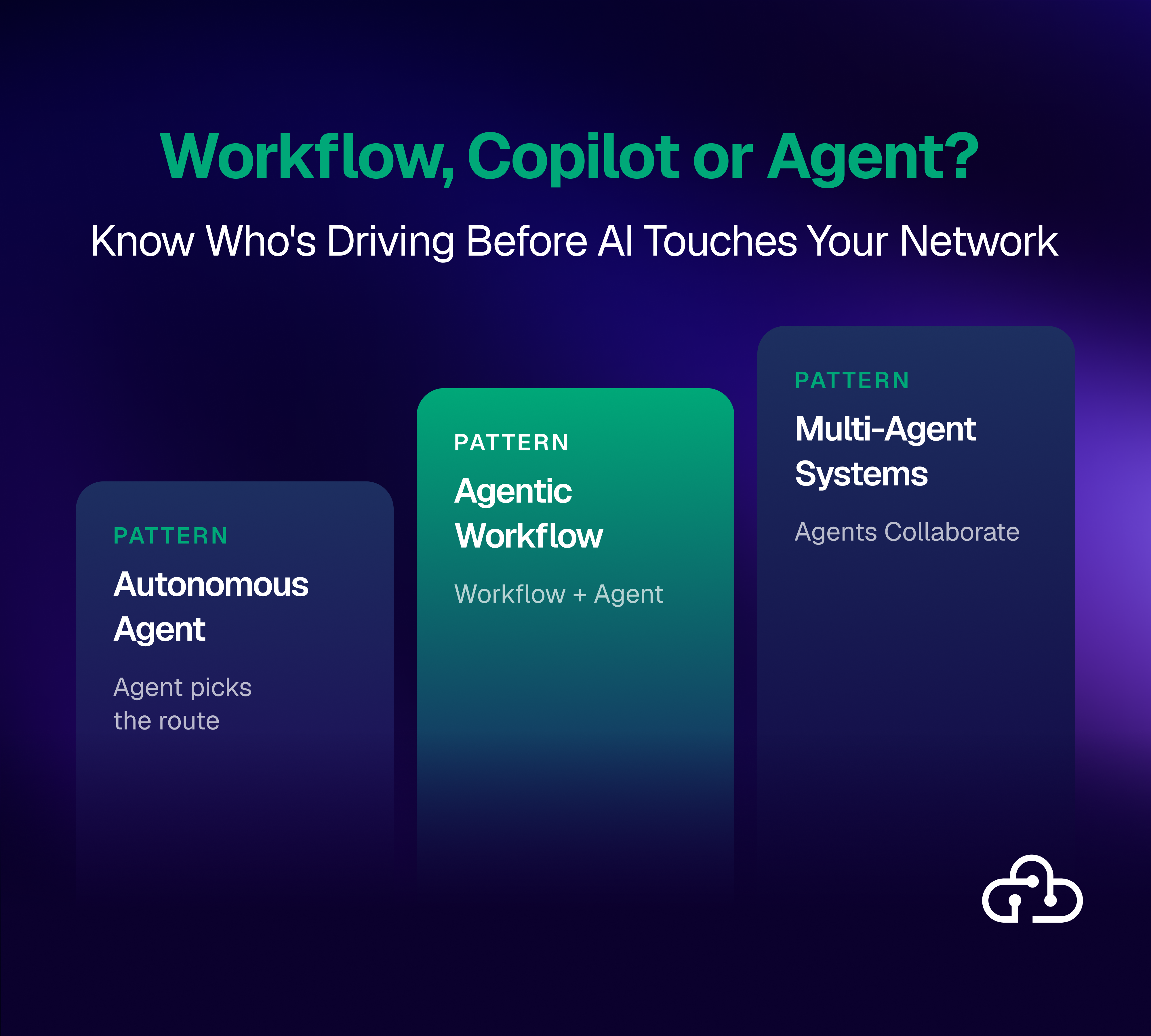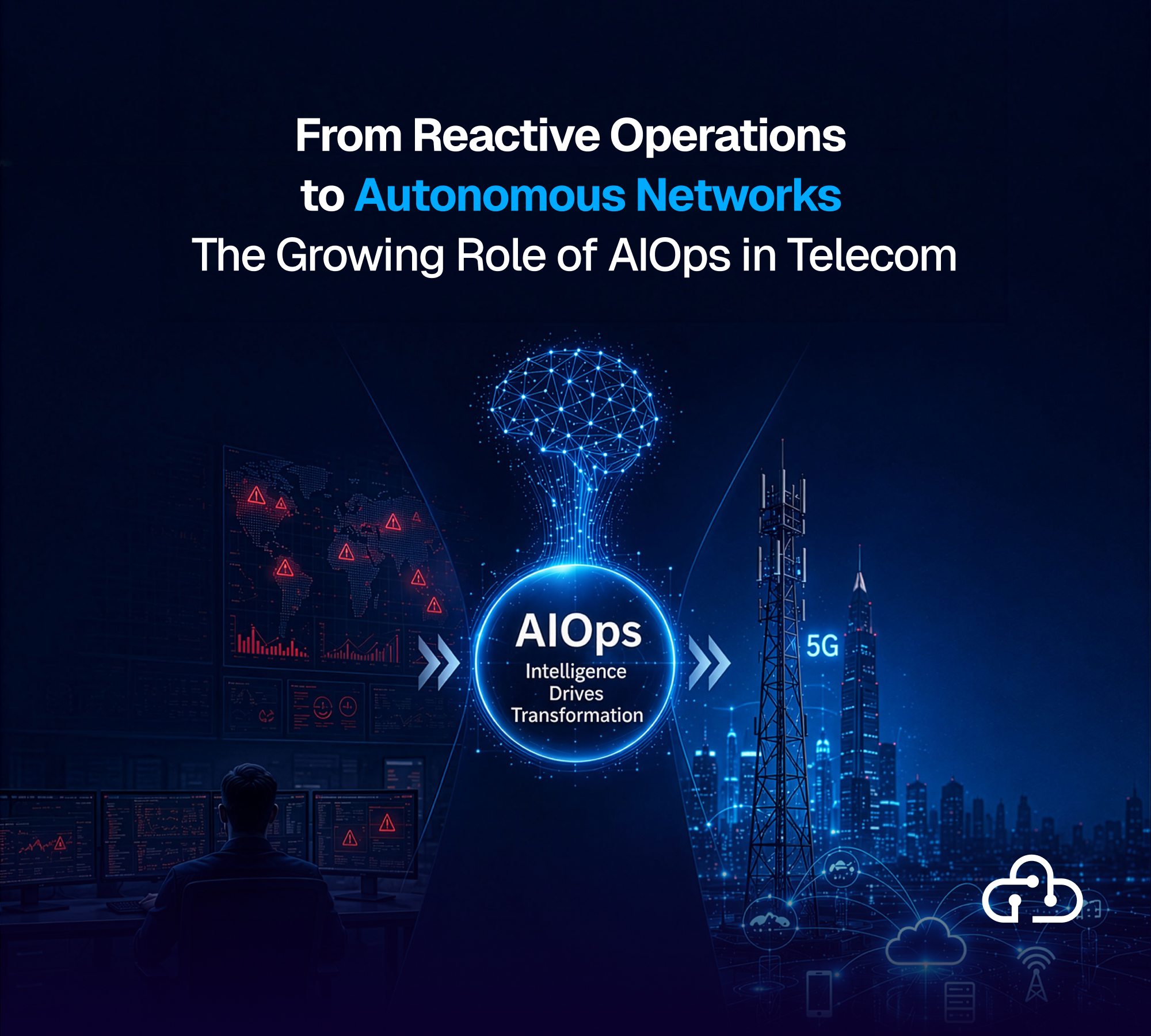

Unlike traditional AI assistants that simply answer questions or generate content, AI agents are designed to reason, make decisions, execute actions, and collaborate with other systems to achieve specific goals. This shift has the potential to fundamentally change how telecom teams operate.
Why Telecom Needs More Than Chatbots
Modern telecom environments are becoming significantly more complex. The introduction of 5G Standalone, Open RAN, edge computing, cloud-native network functions, and AI-driven services has increased both the number of technologies involved and the operational challenges engineers face every day. A single incident may require engineers to analyze alarms, review logs and traces, consult operational documentation, verify configurations, interact with multiple management platforms, and coordinate with several teams before identifying the root cause. While Generative AI can already help summarize information or answer technical questions, many operational tasks still require engineers to manually perform a sequence of actions across different systems. This is where Agentic AI introduces a new paradigm.
What Is Agentic AI?
Agentic AI refers to AI systems capable of performing multi-step tasks with a defined objective. Unlike a standard AI assistant that responds to a single prompt and stops, an AI agent can understand a goal, plan the steps needed to reach it, select the right tools, pull information from multiple sources, and adapt its reasoning as new information comes in. When required, it can even execute actions with human approval built into the loop. The result is something fundamentally different from a chatbot: not a conversational assistant, but an operational collaborator.
From Information to Action
The real value of agentic AI lies in its ability to combine intelligence with execution. To understand what that means in practice, consider a network engineer investigating a service degradation. Traditionally, that investigation means jumping between monitoring dashboards, documentation repositories, ticketing systems, and configuration databases; a slow, fragmented process that drains time and focus. An AI agent changes that entirely. It can gather the relevant alarms and KPIs, analyze logs and traces, retrieve the appropriate runbooks and operating procedures, and compare the current behavior against historical incidents, all in one continuous workflow. From there, it can generate a troubleshooting summary, prepare a structured handover for another team, and recommend the next operational actions. The engineer stays in control throughout, but the repetitive, time-consuming investigation work is dramatically reduced.
Why Multi-Model AI Matters
No single AI model is optimized for every task. Some models excel at reasoning through complex problems, while others are better suited for processing images, interpreting diagrams, transcribing audio, or handling high volumes of routine requests efficiently. Modern AI platforms increasingly account for this by relying on multi-model architectures; routing each task to the most appropriate model based on cost, performance, and capability. Rather than forcing one model to do everything, this approach lets organizations get the best result for each specific task, improving both efficiency and scalability without sacrificing quality.
Agentic AI and the Future of Telecom Operations
The telecom industry is steadily moving toward autonomous networks. Systems capable of monitoring, optimizing, and recovering with minimal human intervention and agentic AI represents one of the most important building blocks for getting there. Combined with automation frameworks, testing platforms, observability tooling, and AI-powered troubleshooting, intelligent agents can help operators accelerate incident investigation, improve operational consistency, reduce manual workloads, and support faster service validation and deployment. Engineering teams can collaborate more effectively, and overall operational efficiency improves, all while keeping humans in control of the decisions that matter most.
The key point here is that agentic AI doesn't replace engineers. It augments them by removing the repetitive, time-consuming work so they can focus on higher-value activities and the kind of complex decision-making that still requires human judgment.
Introducing the Agentic AI Discovery Lab
To help professionals understand this emerging technology through hands-on experience, LabLabee has launched the Agentic AI Discovery Lab. Designed for engineers, IT teams, AI contributors, managers, HR professionals, and anyone exploring AI adoption, the lab introduces the core concepts behind modern AI agents through realistic telecom scenarios. Participants build three working telecom-oriented AI agents, explore how different AI models collaborate across text, images, PDFs, and audio, and learn how reusable skills and Model Context Protocol (MCP) connectors allow agents to interact with external systems through guided workflows. Rather than focusing solely on theory, the lab provides practical exposure to how Agentic AI can support real operational use cases, from runbook assistance and field operations to network troubleshooting and AI-assisted decision-making.
As the telecom industry moves toward increasingly intelligent and autonomous operations, understanding how AI agents work will become an essential skill for both technical and business teams. Start building your first AI agents today with LabLabee. Get in touch with us here.