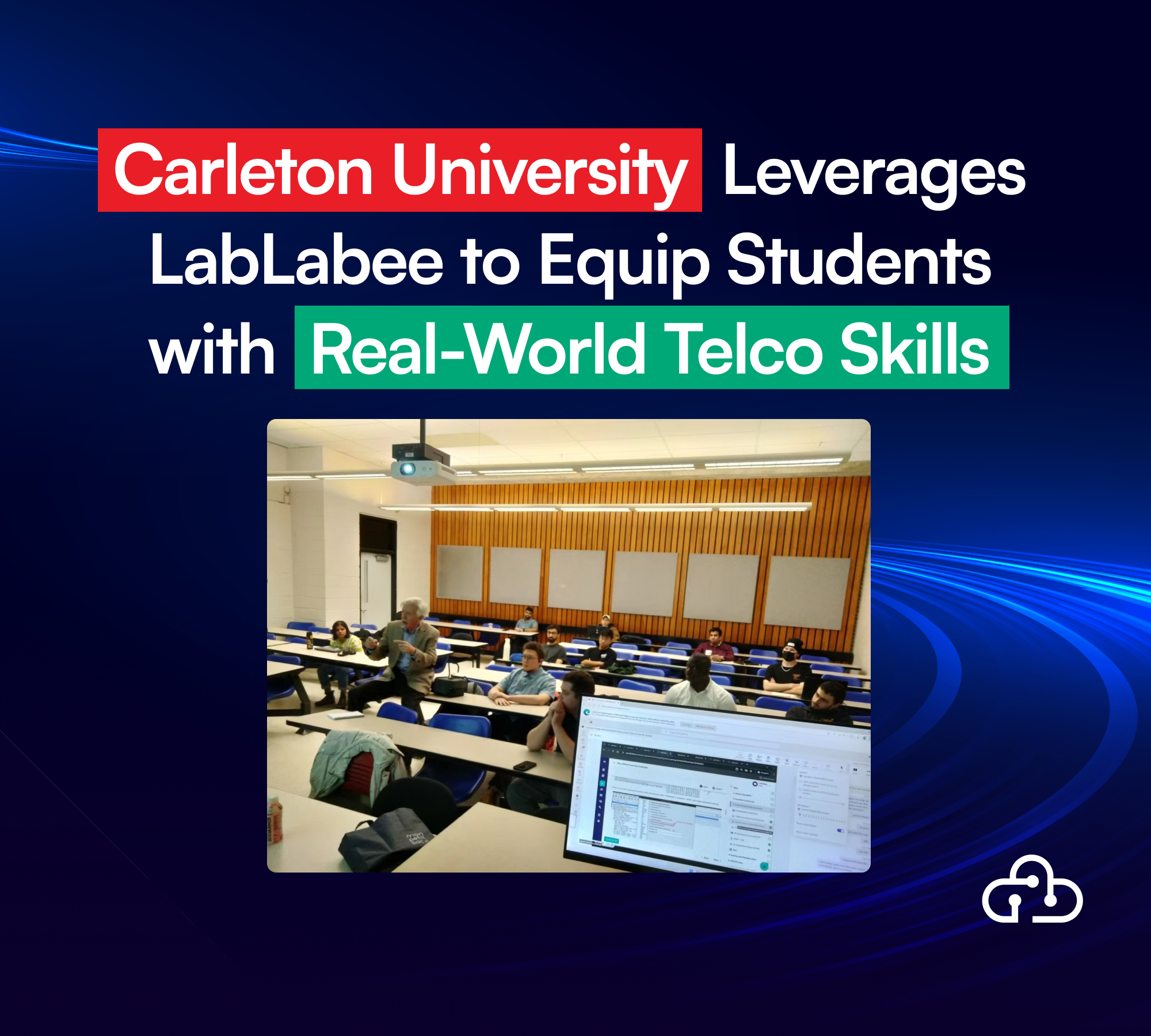
As part of this collaboration, Carleton University leveraged the LabLabee platform to expose students to realistic telecom workflows, bridging the gap between academic theory learned in class and real-world industry practice.
Using LabLabee’s virtual labs, students gain hands-on experience with realistic 5G mobile network deployment, software and protocols, cloud-native architectures, and operator-grade infrastructures. This approach enables learners to move beyond theoretical concepts and develop practical skills aligned with current industry practices, better preparing them for careers in telecom, networking, and cloud technologies.
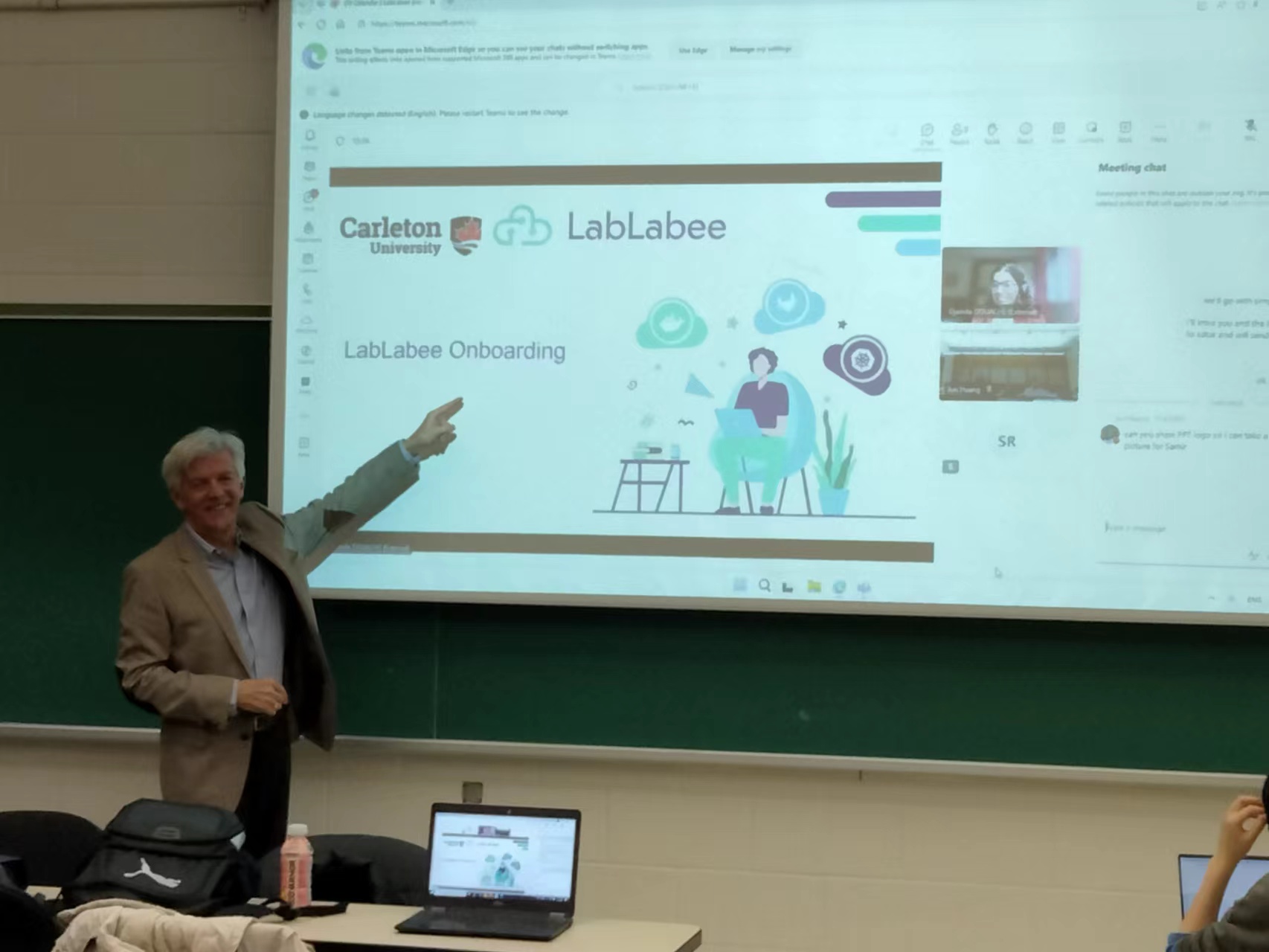
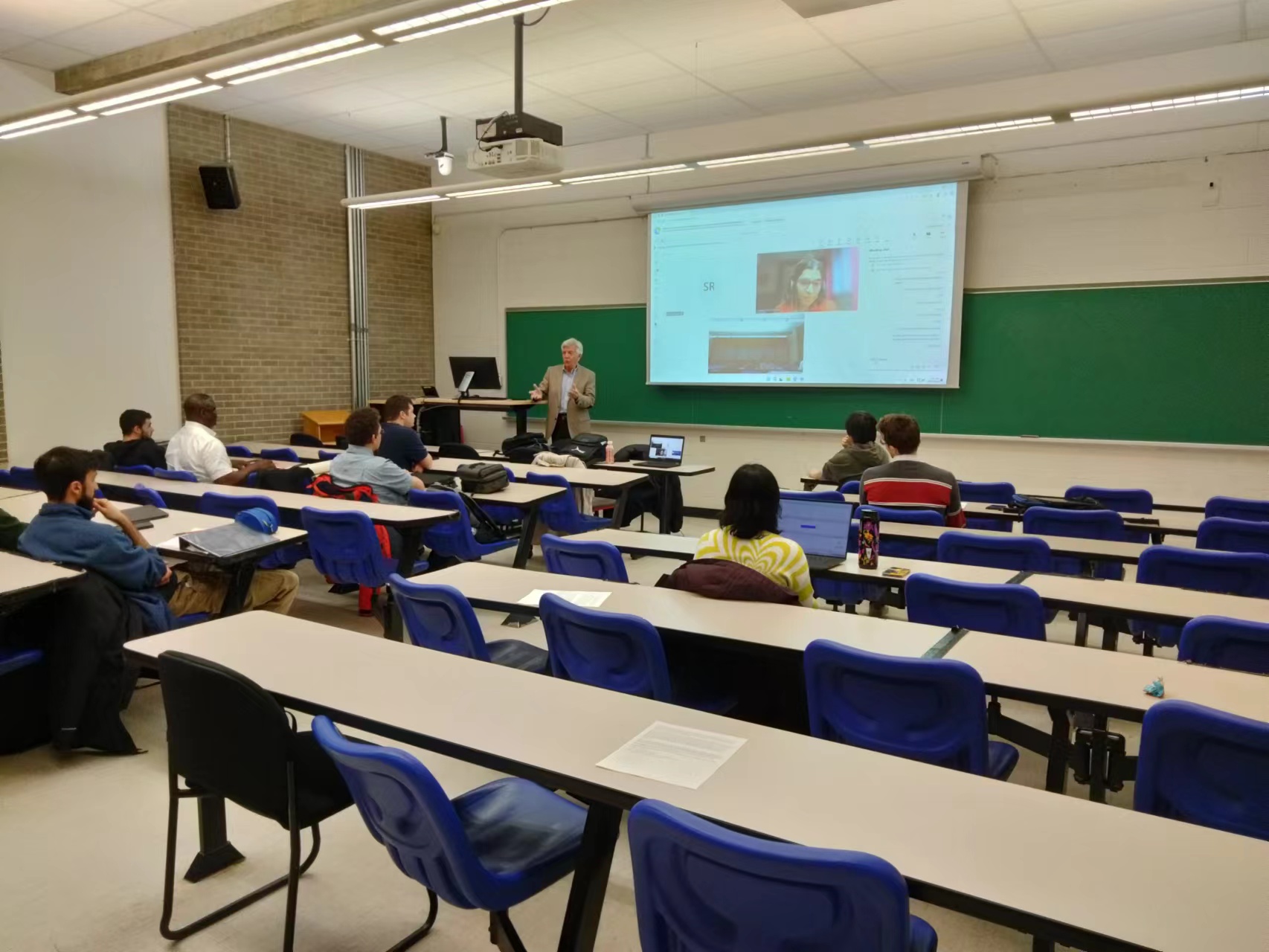
"We are very impressed by the depth of industry know-how embedded in the LabLabee platform — it exceeded our expectations. What we especially like about LabLabee is that it’s truly designed around real industry workflows and an operator/vendor environment. Many traditional tools tend to sit in a semi-academic, semi-industry space. Our goal is to train students to be ready for a real-world industry working environment, not only for academic research.”
— Jun Huang, Ph.D, Adj. Professor, Carleton University
"The LabLabee platform allowed us to quickly prepare a comprehensive curriculum for a new initiative in Software for Mobile Networks for our graduate level students. In addition to underpinning our lectures, the LabLabee exercises provided students great hands-on experience in mobile network deployments, and in cloud-based 5G core and radio access networks, that is directly related to their lecture learning.”
— Stephen Rayment, Adj. Professor, Carleton University
This collaboration underscores the growing need to better align academic programs with real industry requirements. By integrating a hands-on approach into academic learning, LabLabee enables universities to equip students with practical, job-ready skills directly applicable in the workplace, ensuring graduates are better prepared to contribute effectively to the telecom ecosystem from day one.