
As networks evolve, traditional operational models based on manual testing and reactive troubleshooting are reaching their limits. Engineering teams face growing pressure to validate configurations faster, reduce operational risks, and resolve incidents before they impact services.
This is where AI-powered testing and troubleshooting are becoming essential.
The Growing Complexity of Telecom Operations
Modern telecom networks generate massive volumes of operational data every second, such as network logs, alarms and alerts, metrics and traces, PCAPs, etc.
At the same time, operators are deploying increasingly dynamic environments built on technologies such as Kubernetes, Open RAN, CI/CD pipelines, GitOps, and cloud-native network functions (CNFs).
In these environments, identifying the root cause of an issue manually can take hours. Teams often need to correlate data across multiple vendors, domains, and infrastructure layers before understanding what is actually happening.
The challenge is no longer only operating the network, but it is operating it at scale, with speed and accuracy.
Why Testing Is Becoming Critical
In traditional telecom environments, changes were relatively infrequent and tightly controlled. Today, software-driven networks evolve continuously.
Operators must constantly:
- Validate new configurations
- Test upgrades and patches
- Verify interoperability between vendors
- Simulate deployment scenarios
- Ensure network resiliency before production rollout
Without proper testing, even small configuration issues can lead to service degradation or outages.
AI-powered testing helps operators move from static validation processes to more intelligent and automated approaches. Instead of manually checking logs or analyzing test outputs, AI can assist teams by:
- Detecting anomalies in test results
- Identifying misconfigurations faster
- Correlating failures across multiple systems
- Accelerating validation cycles
- Expanding the test surface to cover more cases
This enables engineering teams to test more scenarios, reduce deployment risks, and speed up innovation and time to market.
Accelerating Troubleshooting with AI
Troubleshooting remains one of the most time-consuming activities in telecom operations.
When incidents occur, engineers often need to manually inspect packet captures, compare logs from different systems, and investigate multiple potential causes before finding the issue.
AI-driven troubleshooting changes this process significantly.
By analyzing operational data in real time, AI can help:
- Detect abnormal network behavior
- Correlate events across systems
- Identify likely root causes
- Recommend corrective actions
- Reduce Mean Time To Resolution (MTTR)
For example, in a 5G PDU session failure scenario, AI-assisted diagnostics can analyze signaling traces and network events to identify where the procedure failed and why, while also providing recommendations aligned with telecom standards and best practices. As a bonus, if a recent change is related to the failure, it can be precisely identified and a rollback proposed.
The objective is not to replace engineers, but to augment their ability to troubleshoot faster and operate increasingly complex infrastructures more efficiently.
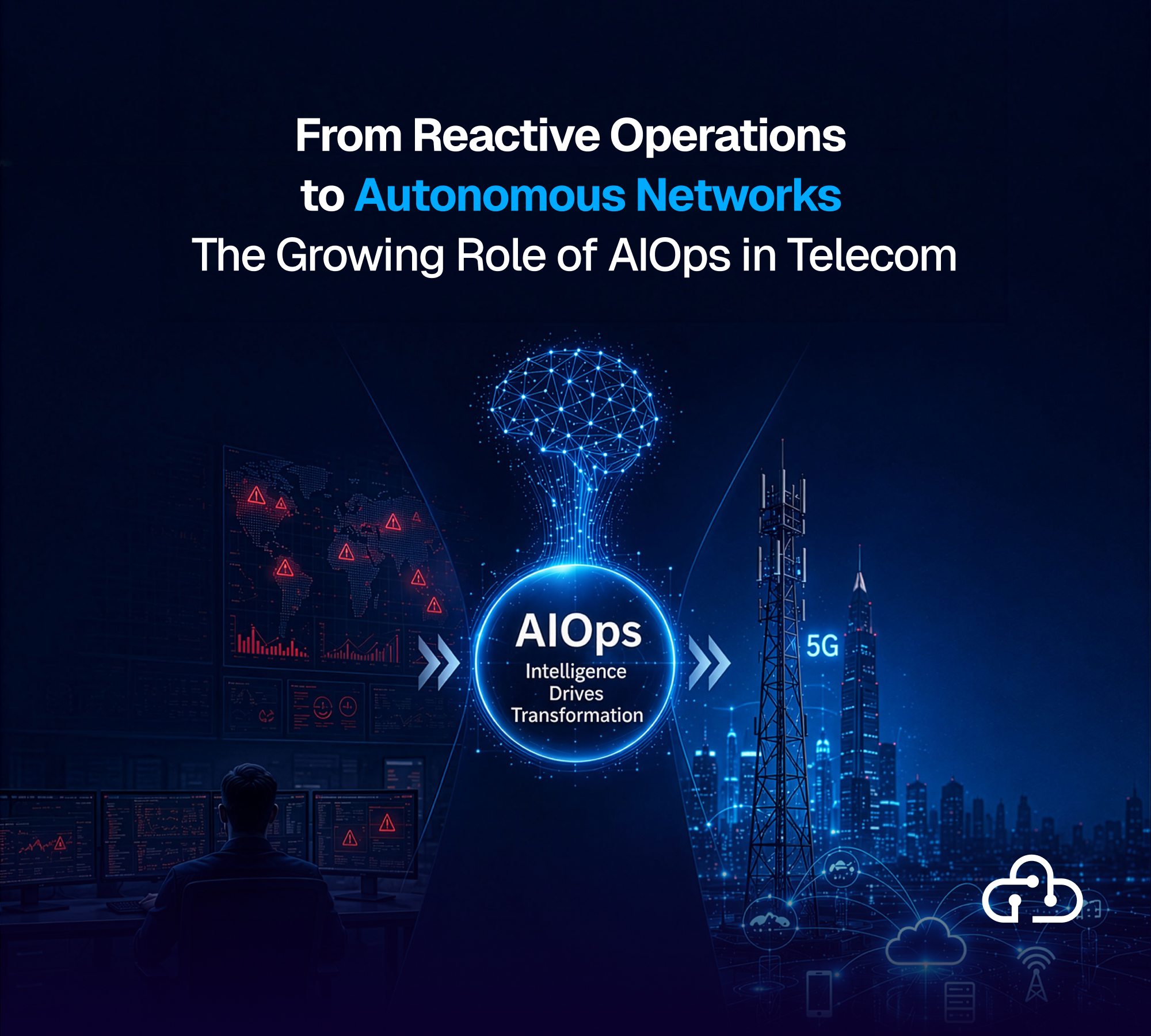
From Reactive Operations to Autonomous Networks
AI-powered testing and troubleshooting are also key building blocks for autonomous networks.
Before operators can fully automate network operations, they first need:
- Reliable validation mechanisms
- Continuous observability
- Intelligent troubleshooting capabilities
- Confidence in automated actions
Testing and troubleshooting, therefore, become foundational layers for closed-loop automation. Operators cannot automate what they cannot validate or understand.
As AI capabilities mature, telecom organizations are progressively moving from:
- Manual operations
- Assisted operations
- Automated workflows
- Closed-loop autonomous operations
This transition requires both technology and operational readiness.
How LabLabee Supports This Evolution
At LabLabee, we focus on helping telecom teams accelerate this transition through practical AI-powered operational tools.
Our platform provides:
- AI-powered testing to validate scenarios and configurations in realistic telecom environments
- AI-driven troubleshooting to accelerate root cause analysis across multi-vendor infrastructures
- Hands-on environments designed to simulate real operational conditions
By combining testing, validation, and troubleshooting capabilities in one platform, LabLabee helps operators improve operational efficiency while preparing teams for cloud-native and AI-driven network operations.
Conclusion
As telecom infrastructures continue evolving toward cloud-native and AI-native architectures, operators need more than traditional monitoring and reactive workflows.
AI-powered testing and troubleshooting are becoming essential to reduce operational complexity, accelerate issue resolution, improve service reliability, and support the transition toward autonomous networks.
The future of telecom operations will depend not only on automation itself, but on the ability to continuously validate, analyze, and optimize increasingly dynamic network environments.
Discover the full capabilities of LabLabee AI Test and AI Troubleshoot.
Contact us to learn more and request a demo.